4.9
Headless commerce development for faster storefronts
Separate your storefront from your commerce backend so you can launch features faster and cut load times, on Magento, Shopify, BigCommerce, or any platform you run.
Trusted by 700+ leading brands worldwide


Trusted by 700+ leading brands worldwide
The team behind the best headless builds
700+
Brands supported worldwide
$4B+
Generated for our clients per year
2100+
eCommerce projects since 2003
.png)
.png)
%201.png)
3 consecutive web design awards at Meet Magento



.png)
.avif)
What headless commerce means
Headless commerce separates the storefront your customers see from the commerce backend that handles pricing, catalog, and checkout. The two connect over APIs, so you can rebuild or replace the frontend, add a new channel, or release a feature without touching the core system.
That decoupling is what makes a headless build faster to load and faster to change, and it works the same way on Magento, Shopify, or a composable stack.
Why brands go headless with scandiweb

Platform-neutral
We build headless on Magento, Shopify, BigCommerce, Salesforce, and WooCommerce, so the build fits the stack you already run.

Frontend engineering depth
React, Vue, Next.js, and Hyvä frontends built by the team behind ScandiPWA, which runs in production for 500+ brands.

Integrations handled
Search, payment, PIM, ERP, and CMS wired into the headless stack over APIs, tested against real data before launch.

Migration without downtime
Moving off a monolith to headless with rankings, redirects, and catalog preserved through the cutover.

Speed you can measure
Core Web Vitals and load times tracked before and after, because a headless build only pays off if the storefront is faster.

Enterprise and B2B-ready
Multi-store, multi-market, and B2B headless setups for brands that outgrow a single templated storefront.
Steps during a headless eCommerce project
In a headless build, the architecture is decided before any frontend is written, so we scope the stack first and migrate in stages.

Strategy and architecture

We map your goals, channels, and systems, then design the headless architecture and the API layer that connects them.

Custom frontend development
The storefront is built in React, Vue, Next.js, or Hyvä, with performance budgets set from the start.

Integrations and migration
Backend, search, payment, and content systems are connected, and the store is migrated off the monolith in stages.

Ongoing optimization
After launch, we watch Core Web Vitals and conversions, and implement improvements on the same decoupled codebase.

Platforms and frameworks we build on

Magento and Adobe Commerce
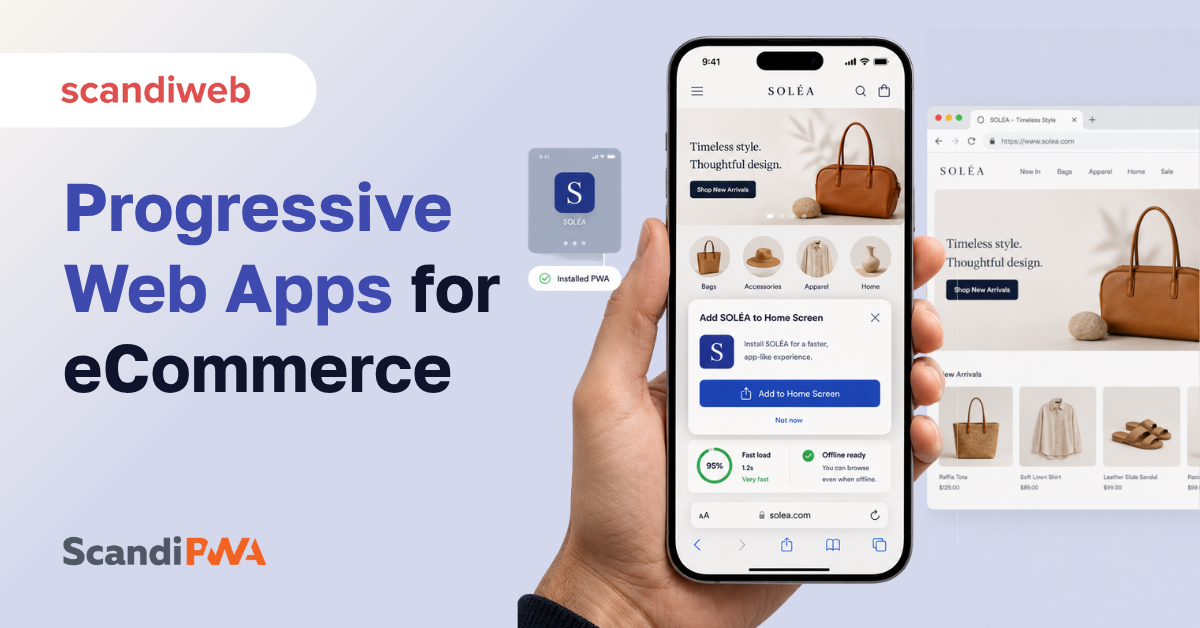
Headless Magento with a React or Hyvä frontend. For the ScandiPWA route, see our Magento PWA development page.
Shopify and Shopify Plus
Headless Shopify on Hydrogen and custom React frontends, connected to the Storefront API.
BigCommerce
Headless BigCommerce storefronts over the GraphQL Storefront API, with the catalog and checkout kept in place.
Frameworks
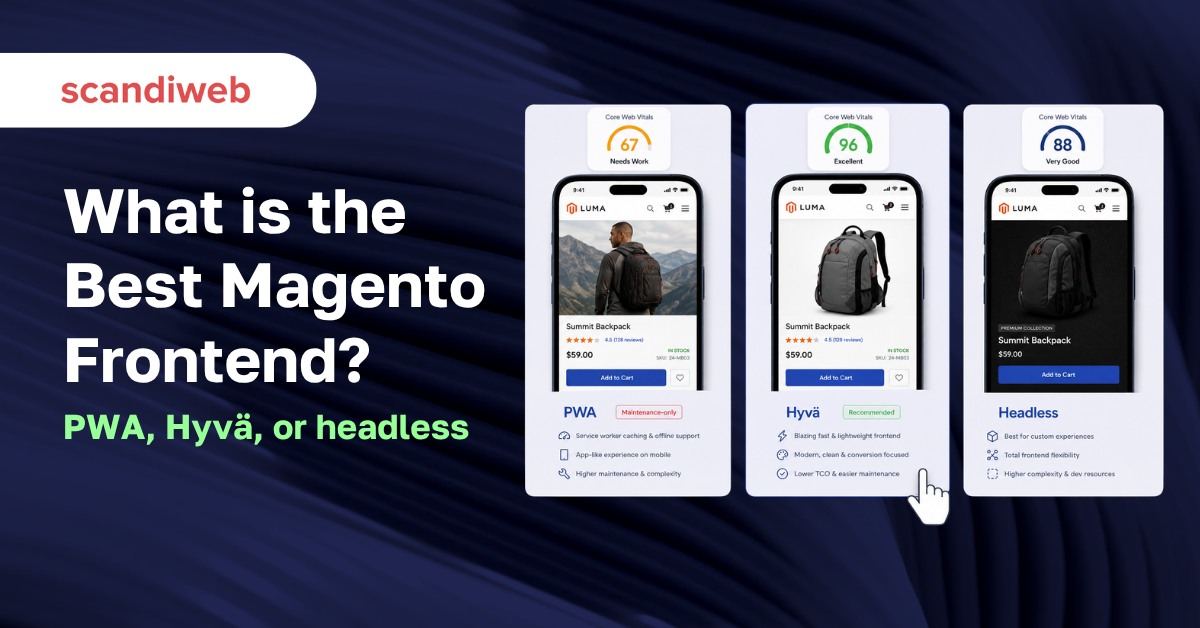
React, Vue.js, Next.js, and Hyvä. For a custom PWA storefront specifically, see PWA development.
Headless eCommerce projects we've delivered
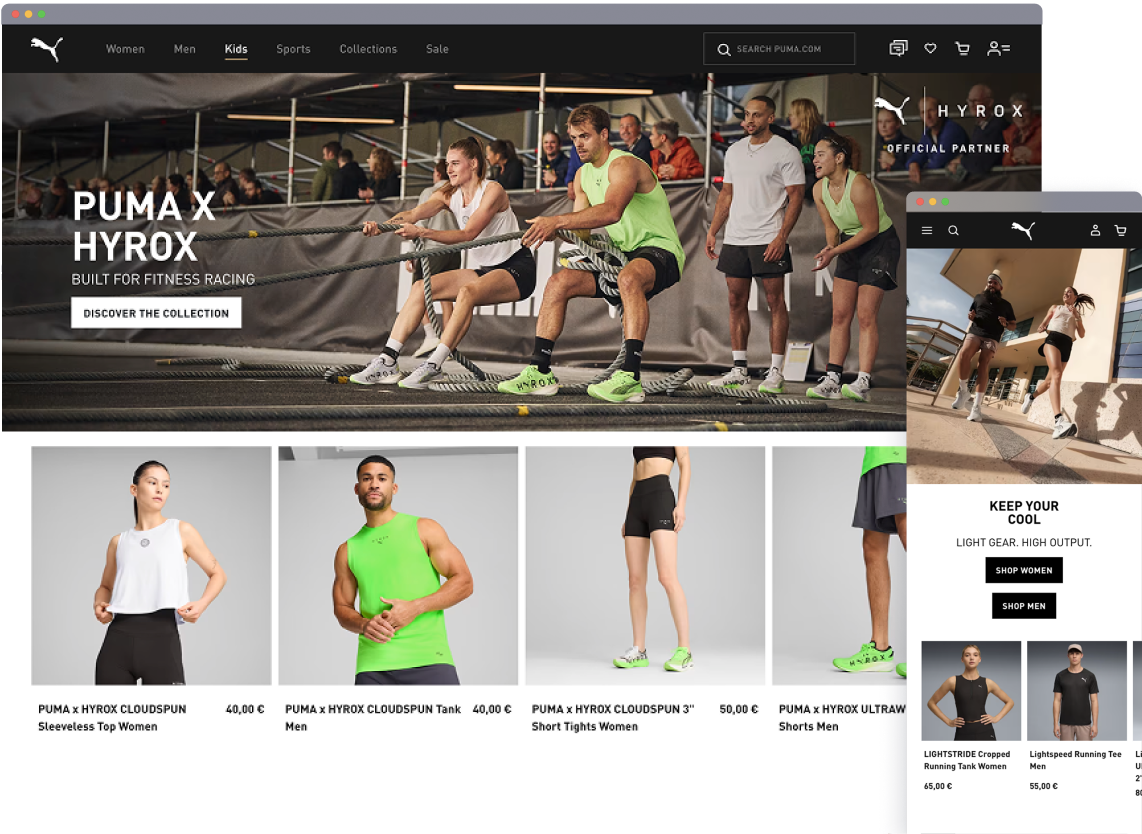

4 new markets launched in 95 days with 3x better performance
3x
Better performance
-27%
5,000+
Orders within first months
Learn more
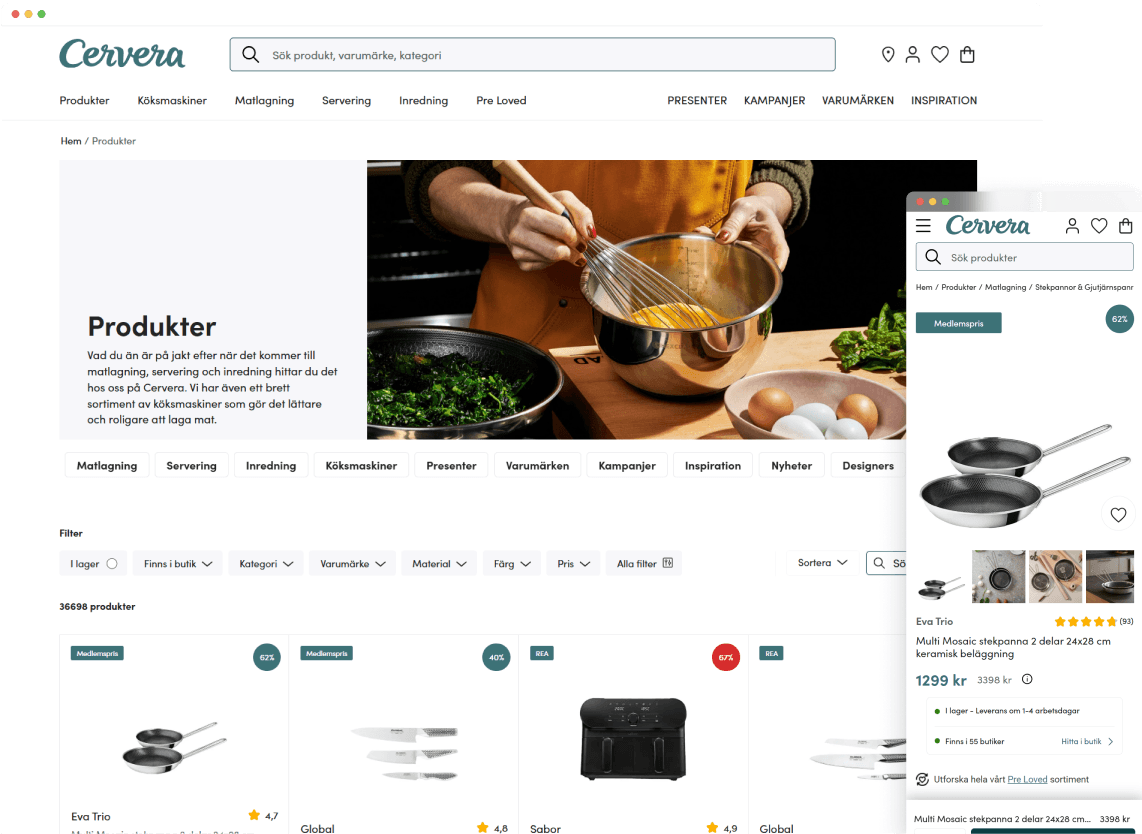

Single-page application for flexibility and performance
+148%
Mobile revenue
+73.32%
Add-to-cart rate
+20.1%
Checkout conversion rate
Learn more


A beauty brand’s eCommerce built for the mobile-first generation
$1.3M
New revenue created
+80%
Conversion rate
+32%
Revenue YoY
Learn more

Certified experts in headless commerce












What clients say about working with scandiweb

.webp)




.png)
Get a plan for going headless
Tell us your platform and what is slowing your storefront down, and a specialist will reply with the right headless approach and a clear estimate.

Headless commerce questions answered
What makes headless commerce different from traditional commerce?
In a traditional store the frontend and backend are one system, so a change to the storefront can mean touching the whole platform. Headless splits the two and connects them over APIs, so you can rebuild the storefront, add a channel, or ship a feature without changing the core. That is what makes a headless build faster to load and faster to change.
How long does a headless commerce migration take?
It depends on your catalog, integrations, and how much of the frontend is rebuilt, so a tailored estimate follows a short discovery. We migrate in stages, which keeps the current store live and the rankings intact while the headless storefront is built and tested.
What is the difference between headless and composable commerce?
Headless separates the frontend from one commerce backend. Composable goes further and assembles the backend itself from best-of-breed services (search, checkout, CMS) over APIs. Headless is often the first step, and a composable stack is where some brands end up as they replace more of the monolith.
Is headless cost-effective for startups as well as enterprises?
Startups get quick returns from a lightweight headless setup that loads fast and scales, while enterprises gain the customization and traffic headroom a monolith cannot give. The scope, and the cost, follow your size and goals, so there is no fixed package.
Which platforms work best for headless commerce?
Almost any modern platform can go headless. Magento and Adobe Commerce suit enterprise catalogs and complex logic, Shopify and Shopify Plus move fast with Hydrogen, and BigCommerce offers a clean GraphQL API. We build on all of them, so the choice comes down to your catalog, your team, and your roadmap.
Is headless commerce worth it for my store?
Headless pays off when your storefront is slow, your roadmap is blocked by the platform, or you are adding channels a templated store cannot serve. If your store is small and standard, a lighter setup may be the better call, and we will tell you which side you are on before any build.
How do you handle ongoing support for a headless store?
A dedicated team handles updates, monitoring, performance checks, and security patches after launch, on the same decoupled codebase we built. Because the frontend and backend are separate, most changes ship without downtime on the other side.
Can you migrate us to headless without losing SEO?
Yes, and protecting rankings is part of the plan. We map redirects, preserve URL structure and metadata, and keep the current store live until the headless build passes its checks, so organic traffic carries over. Our Beauty Works migration grew revenue 32% year over year after launch.

Plan your headless build with us
Tell us your platform, the systems the storefront must connect to, and where performance is holding you back.
Prefer to talk now? Book a call straight away, or email us at: info@scandiweb.com

Related services
Let's build something great together